
What is IBU in Beer?
When you’re picking a craft beer at the bar or a grocery store, what information grabs you? Maybe it’s the style itself, like the ever-popular Hazy IPA, or it’s a key stat like alcohol by volume (ABV) — do you want an easy-drinker or a heavy-hitter?
But what about that other common acronym, IBU, that’s on taproom menus or right there on the six-pack box? Let’s explore what it tells you about a given beer and how it might influence your next choice at happy hour.
What Does IBU Stand For?
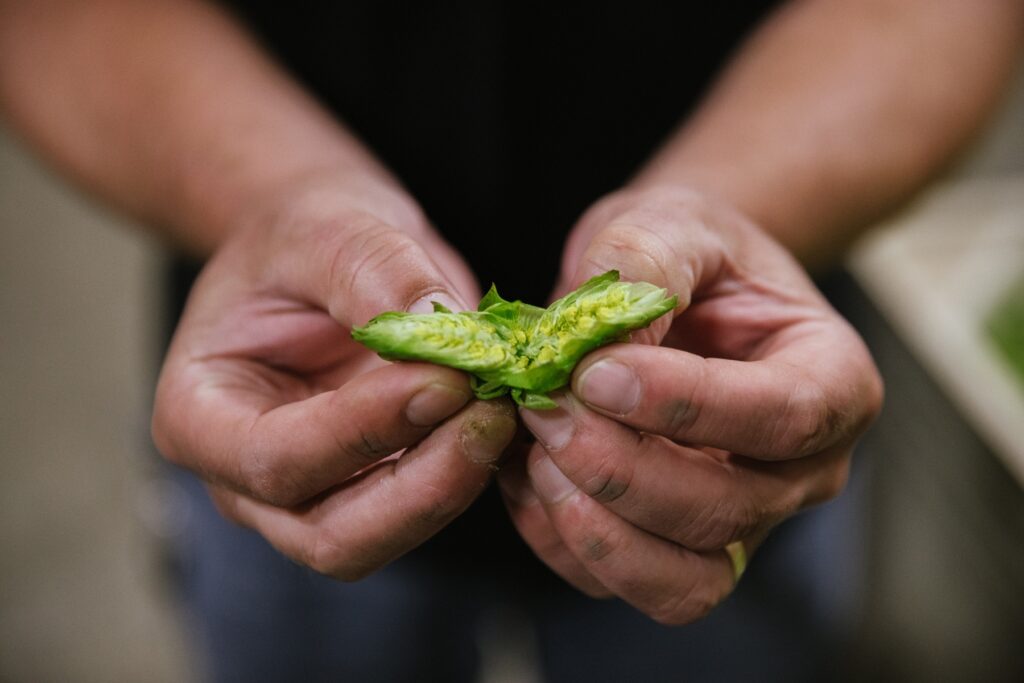
When you see IBU, meaning International Bitterness Units, the number reflects a beer’s bitterness and is derived from hops. Split a hop cone down the middle and inside you’ll find lupulin, the tiny yellow pods packed with resins and essential oils that are central to aroma, flavor, and bitterness in beer.
IBU Beer Bitterness Scale
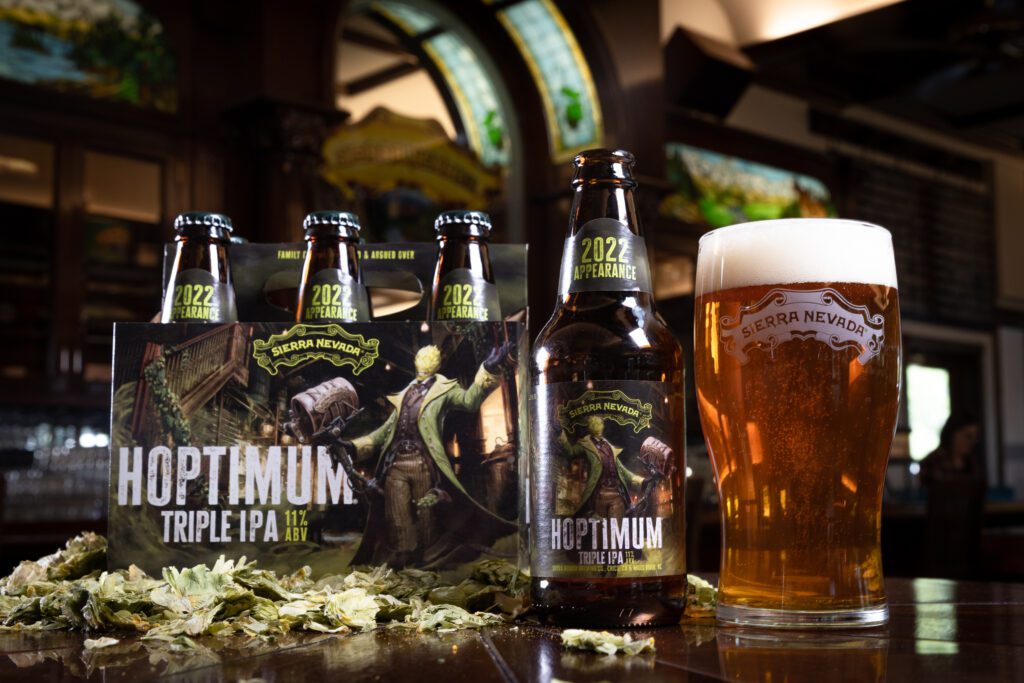
Said plainly, IBU is a beer bitterness scale that starts at zero and, as our Senior Quality Advisor Charlie Bamforth explains, “the highest value you can get is 100, no matter what some people claim.” (Those 100+ IBU beers are mostly shock value.) Our Hoptimum Triple IPA measures 75 on the IBU scale, and it’s no doubt meant to have some bitterness in its flavor profile. Hazy Little Thing, on the other hand, is far more modest at 35 IBU.
But the number isn’t everything; how our taste buds perceive bitterness is crucial. Sierra Nevada Pale Ale is 38 IBU — a pinch higher than Hazy — but most drinkers perceive its bitterness as far more prominent. That’s because other elements of Hazy’s recipe, like the sweetness and body from malt, downplay hop bitterness.
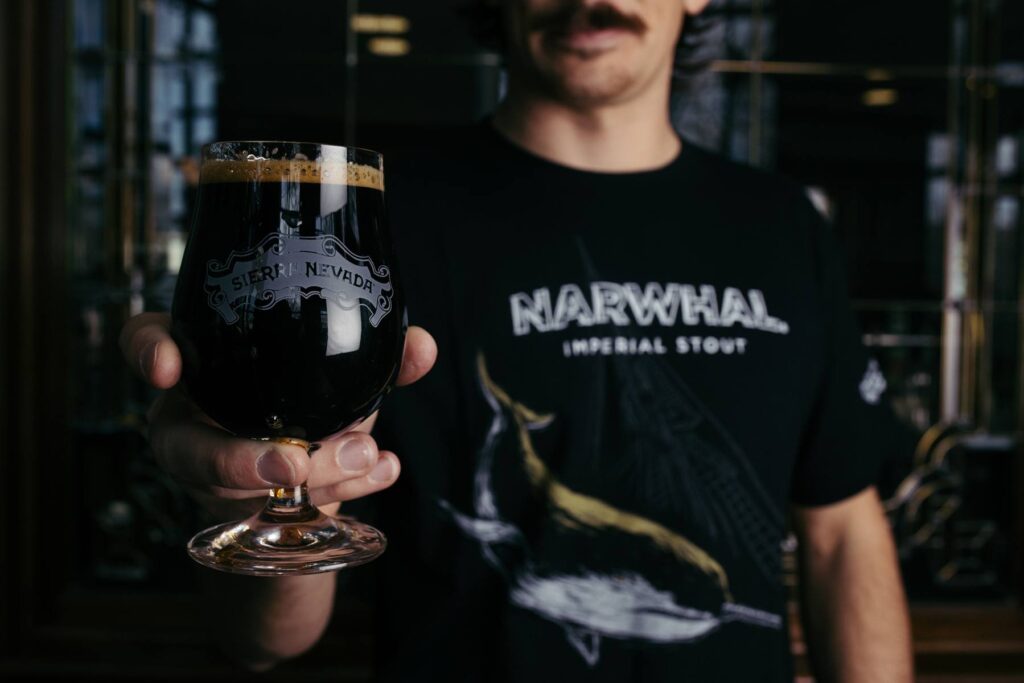
Narwhal Imperial Stout, which overflows with maltiness, happens to register 60 IBU. And while you’ll taste bitterness in Narwhal, it likely won’t hit the same as an aggressive IPA-style beer, like our Torpedo Extra IPA at 65 IBU.
What Does IBU Measure?
IBU measures the bitterness in a beer that’s contributed by hops — specifically, the amount of bitter acids the lupulin supplies. To find its IBU number, the beer is extracted with an organic solvent, creating a solution that’s then exposed to ultraviolet light. The more UV light a solution absorbs, the more bitterness is present and the higher the IBU.
What Makes Beer Bitter?
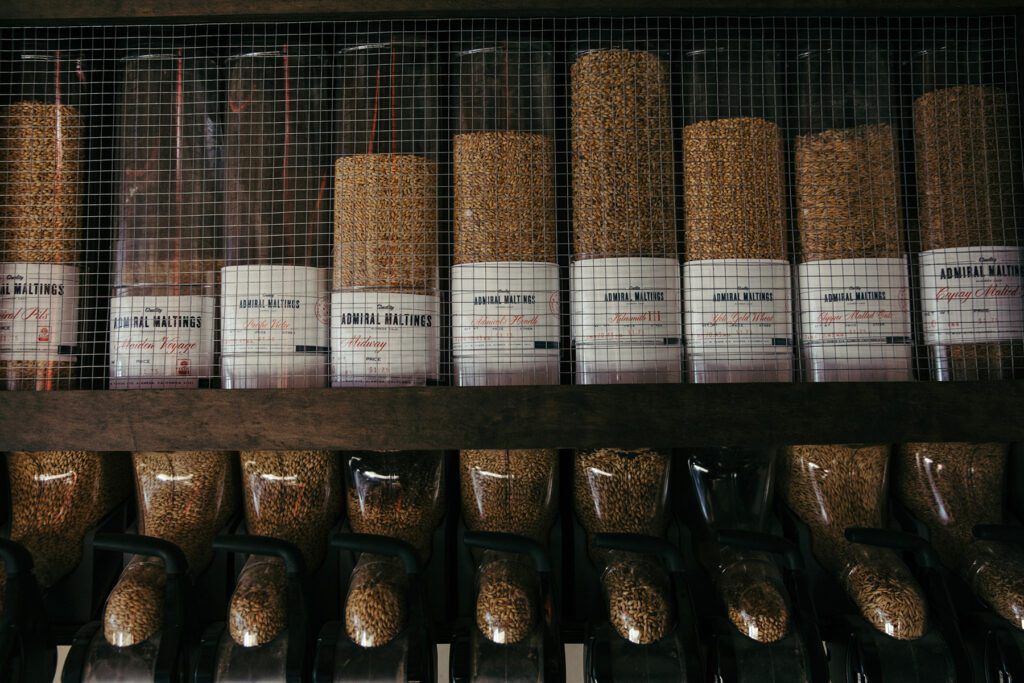
It’s primarily the bitter acids from hops that make beer bitter, and measuring those acids yields the IBU number. However, like clouds can make a 90º summer day feel more like spring, IBU tastes different depending on what else is going on in the beer. There may be a generous amount of sweeter malt varieties that help balance the bitterness. Conversely, some malts are roasty enough that, like dark-roasted coffee beans, they actually contribute their own perceived bitterness to beer.
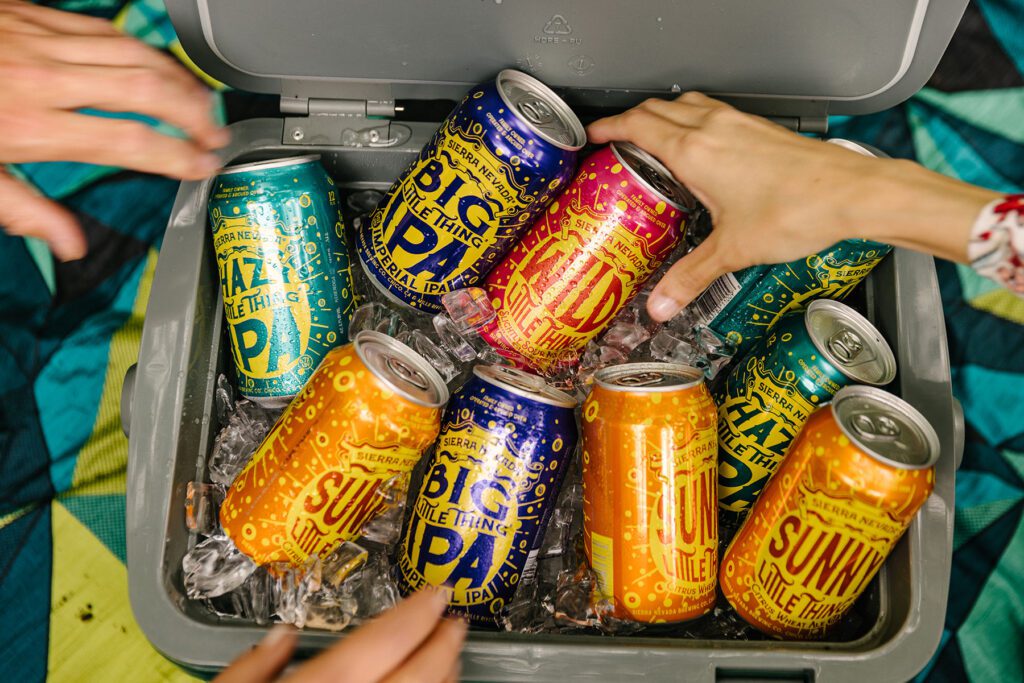
Craft brewers know how to manipulate the puzzle pieces to achieve a certain drinking experience. Sunny Little Thing, for example, has a minimal 10 IBU, and that’s the point: we want the citrus to shine, so we kept bitterness at bay. Slide the scale and find Celebration IPA at a whopping 65 IBU — but its rich malt character brings notes of caramel that harmonize with the bold fresh hops.
What is the IBU In Different Styles of Beer?
Whether you swear off bitterness, want to find your IBU sweet spot, or treat it as a challenge — Let’s try ‘em all, 0 to 100! — most craft beer styles have ranges that might serve as guides.
American wheat beers, where our Sunny Little Thing lives, tend to keep the bitterness tame, landing in the 10–35 IBU range. New England IPAs, aka hazy IPAs, trend higher at 30–50 IBU, which is right where our Hazy Little Thing and Tropical Little Thing dwell. American stouts can reach 60 IBU; the first beer we ever made is Sierra Nevada Stout and it’s a hoppy 50 IBU. Jump to American barleywines and now you’re flirting with triple digits, anywhere from 65–100 IBU. Our Bigfoot Barleywine, which blew people’s minds when we introduced it in 1983, is unapologetic at 90 IBU.
There were 98 style categories at the 2022 Great American Beer Festival, so to say there’s abundant IBU to explore is an understatement!
Finding IBUs in the Future
Next time you’re scanning the tap list or strolling the beer aisle, you’ll have a full grasp of IBU — and how it can be deceiving. Sometimes an IPA with a high IBU is just that: a bitter blast of hops; that’s likely the brewer’s goal. But other factors, like the sweetness of malt, can take the teeth right out of a snarling IBU.
So check out our brews, and while you’ll find each IBU listed, make sure you read the rest to get the full picture, and the full flavor.
FAQs About IBUs in Beer
What is an IBU in beer?
IBU stands for International Bitterness Units, a scale used to estimate beer’s bitterness from hop-derived compounds. Technically, it’s tied to bitter iso-alpha acids in the finished beer, not “how hoppy” the aroma smells.
What does an IBU rating tell you about flavor?
An IBU rating gives a useful clue about bitterness, but it does not guarantee how bitter a beer will taste. Malt sweetness, beer strength, and even acidity can change perceived bitterness, so two beers with the same IBU can drink very differently.
How is IBU measured?
IBU is commonly measured using a spectrophotometric method that extracts bitter compounds and reads absorbance (often referenced around 275 nm) to estimate bitterness. Some labs also use more advanced methods like HPLC (High‑Performance Liquid Chromatography) to get a deeper breakdown of hop compounds.
Is there a beer bitterness scale, or a “normal” IBU range?
IBU is the most common beer bitterness scale you’ll see on labels and menus. Many easy-drinking lagers and wheat beers sit in the lower ranges, while hop-forward styles trend higher, but style, balance, and freshness matter as much as the number.
Do higher IBUs always mean a more bitter beer?
Not always. IBUs estimate bitter compounds, but perception depends on balance: more malt sweetness can soften bitterness, and certain recipe choices can make bitterness seem smooth instead of sharp.
What is the relationship between ABV and IBU?
ABV and IBU measure different things, so one does not “cause” the other. But higher alcohol and fuller body can change how bitterness lands, sometimes making a higher-IBU beer feel less biting than you’d expect.
Can a beer have “too many” IBUs?
There is no universal hard cap on the scale, but very high IBU numbers can become less meaningful because extraction, solubility, and sensory limits get complicated. That’s why many education-focused sources stress using IBU as a guide, not a scoreboard.
Is IBU the same as hop flavor or hop aroma?
No. IBU is about bitterness, while hop flavor and aroma often come from later hop additions and dry hopping, which can add big citrus, pine, or tropical notes without the same jump in measured bitterness.


